
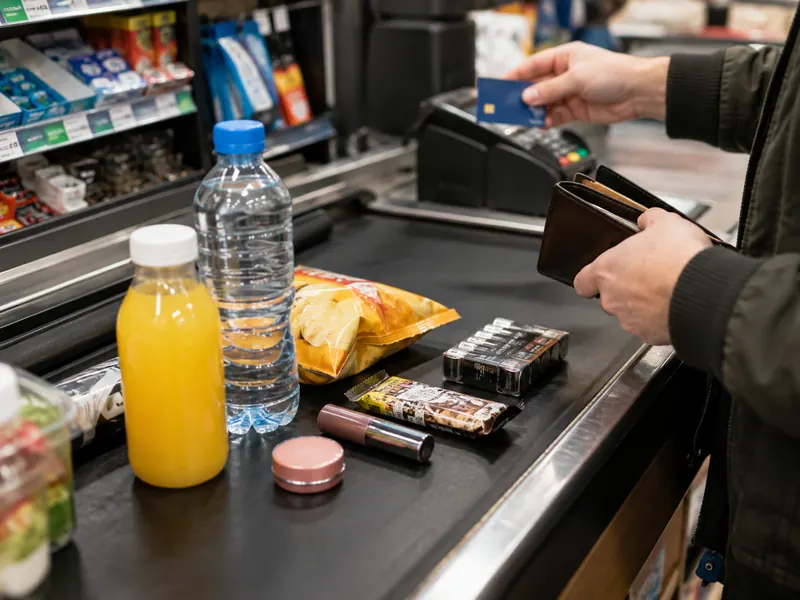
Small purchases are easy to underestimate because each transaction feels insignificant. The important number is not the price of one coffee, snack, or app charge; it is the total frequency over a week, month, and year.
The goal is not to shame everyday treats. Track the categories below, identify which ones you genuinely value, and reduce the ones you barely notice.
1. Coffee and drinks bought out
A purchased drink can be an enjoyable routine, but multiple drinks each week create a recurring category.
Track the monthly total before deciding whether to change it. You may prefer keeping a few favorite outings and making the rest at home.
2. Convenience-store snacks
A snack or bottled drink purchased with fuel often costs more than buying similar items in a grocery pack.
Keep a few shelf-stable options in your bag or car if spontaneous convenience purchases are a frequent pattern.
3. Delivery and service fees
The food itself may fit your budget while the delivery fee, service fee, small-order fee, and tip significantly increase the final total.
Compare the full checkout amount with pickup or cooking at home before placing the order.
4. In-app purchases
Game currency, filters, boosts, storage upgrades, and microtransactions are designed to feel small individually.
Review app-store purchase history and require authentication for purchases if accidental or impulsive spending is a problem.
5. Single-use household items
Paper plates, disposable wipes, bottled water, and other consumables can be useful, but routine use may cost more than reusable alternatives.
Compare convenience, cleaning time, and local water or energy costs before assuming reusable is always cheaper.
6. ATM and payment fees
A few dollars in fees can be easy to ignore because they are attached to a larger withdrawal or transaction.
Use in-network ATMs, fee-free account options, or other payment methods when practical.
7. Impulse add-ons at checkout
Small accessories, warranty add-ons, snacks, and “frequently bought together” suggestions can turn a planned purchase into a larger basket.
Pause before adding anything that was not part of the original reason for shopping.
8. Unused app subscriptions
A low monthly price feels harmless, but several apps renewing together can become a meaningful bill.
Check subscription settings and cancel trials before they become forgotten renewals.
9. Parking and convenience charges
Premium parking, reservation fees, and small convenience charges can become routine in the same locations.
Look for monthly passes, validated parking, public transportation, walking, or different timing when those options make sense.
10. Small online orders
Free shipping thresholds and one-click checkout can encourage separate purchases that might have been combined or avoided.
Keep a wish list for a few days and place fewer, more intentional orders.
Frequency Is the Real Multiplier
Multiply a typical purchase by how often you make it. A $6 habit three times a week is very different from a $6 purchase twice a month. Use your actual frequency instead of annualized scare numbers.
Frequently Asked Questions
Do I have to stop buying coffee to save money?
No. If coffee is something you value, keep it in the budget. The purpose of tracking is to decide intentionally rather than spend automatically.
What is the easiest way to track small purchases?
Use card and bank transaction history, save receipts, or record purchases in a simple notes app for a month.
Should I use cash to control small spending?
Some people find a fixed cash amount helpful, while others prefer digital tracking. Use the method that makes spending visible and easy to maintain.