
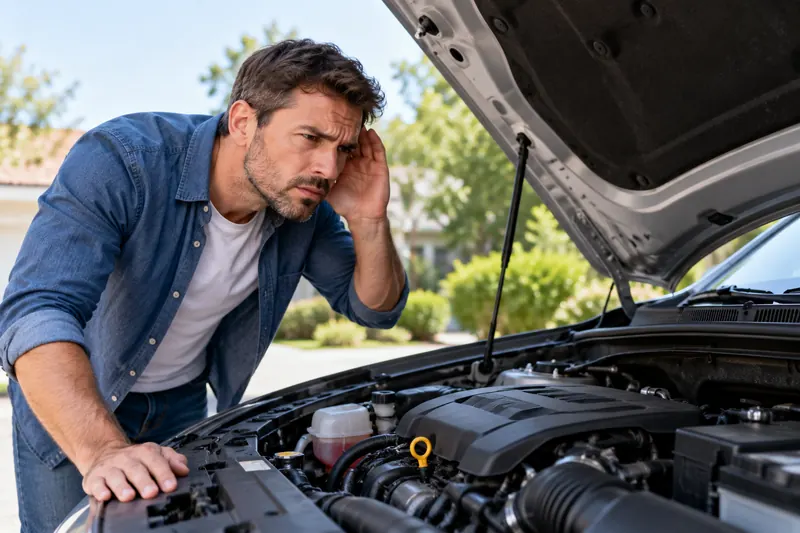
Cars make plenty of normal sounds, but a new, persistent, or worsening noise deserves attention. The location, speed, temperature, steering angle, braking, and engine load can all change what a sound means, so a noise alone is not a diagnosis.
Use this guide to recognize common warning sounds and decide how urgently to respond. If the vehicle feels unsafe, braking or steering changes, warning lights appear, or the sound is severe, stop driving and seek professional help.
1. Grinding when you brake
A harsh grinding sound during braking can indicate severely worn brake pads or another brake-system problem. Metal-on-metal contact can damage rotors and may reduce braking performance.
Avoid delaying a brake inspection. If the pedal feels abnormal, the vehicle pulls, or braking ability is reduced, stop driving when safe.
2. High-pitched squealing that changes with engine speed
A squeal from under the hood can come from a slipping or worn accessory belt, a tensioner, or a pulley. The sound may be more noticeable during startup, acceleration, or when the air conditioner is switched on.
Because belts can drive important components, persistent squealing should be inspected rather than simply silenced with a spray or temporary treatment.
3. Knocking or heavy tapping from the engine
Knocking can have several causes, ranging from low oil level to internal engine problems or abnormal combustion. A deep knock that rises with engine speed is especially concerning.
Check the oil level according to the owner’s manual if it is safe to do so. If the oil-pressure light is on or the sound is severe, switch off the engine and arrange assistance.
4. Clicking or popping while turning
Repeated clicking from a front wheel area during a tight turn can be associated with a worn CV joint on many front-wheel-drive and all-wheel-drive vehicles. Steering or suspension components can create similar noises.
Have the vehicle inspected before the noise worsens, especially if you also feel vibration or changes in steering.
5. Humming or growling that rises with road speed
A growl or hum that gets louder as the car moves faster can come from tire wear or a wheel bearing, among other causes. The sound may change when the vehicle turns and loads one side.
Because wheel and tire problems can affect safety, do not assume the sound is simply road noise if it is new or steadily worsening.
6. Hissing or sizzling after driving
A hissing sound can indicate escaping air, vacuum, refrigerant, or pressurized fluid. A sizzle after parking may occur when fluid reaches a hot surface.
Do not open a hot cooling system. If you see steam, smell coolant, or notice an overheating warning, shut the engine off safely and allow it to cool.
7. Rattling underneath the car
A metallic rattle can come from a loose exhaust heat shield, exhaust component, suspension part, or another fastener. Some rattles are minor, but others signal a part that may detach or fail.
Note whether the sound happens at idle, over bumps, or only at certain speeds. That information helps a technician locate the source quickly.
How to Describe a Noise to a Mechanic
Record when the sound starts, where it seems to come from, whether the car is cold or warm, and what you are doing at the time. A short audio or video recording can also help if it can be made safely.
The Bottom Line
A new mechanical sound is information. The earlier you investigate it, the better the chance of correcting a small problem before it becomes a breakdown or a more expensive repair.
Frequently Asked Questions
Can I keep driving if the car is making a new noise?
It depends on the sound and how the vehicle behaves. Grinding brakes, severe knocking, overheating, steering changes, or a strong vibration can require immediate attention. When in doubt, stop safely and get professional advice.
Why do some noises disappear after the car warms up?
Temperature changes clearances, fluid viscosity, belts, and exhaust components. A sound that disappears may still provide useful diagnostic information and should be mentioned during service.
Is a squeal always a bad belt?
No. Brakes, pulleys, bearings, tires, and other components can squeal. The location and driving condition are important for diagnosis.
A Useful Noise Log for Your Repair Appointment
When it is safe to do so, describe a new noise in terms of when it happens rather than trying to name the faulty part. Mechanics often need to know whether a sound occurs during braking, turning, accelerating, idling or traveling over uneven roads.
- Record whether the sound changes with vehicle speed or engine speed; those are not always the same.
- Note whether the noise appears when the vehicle is cold, warm, loaded or turning in one direction.
- Tell the repair shop about any vibration, pulling, warning lights or change in braking.
If a noise comes with reduced control, smoke, a strong burning smell or serious braking symptoms, stop safely and seek assistance. A recording made by a passenger can be useful, but nobody should operate a phone while driving.