
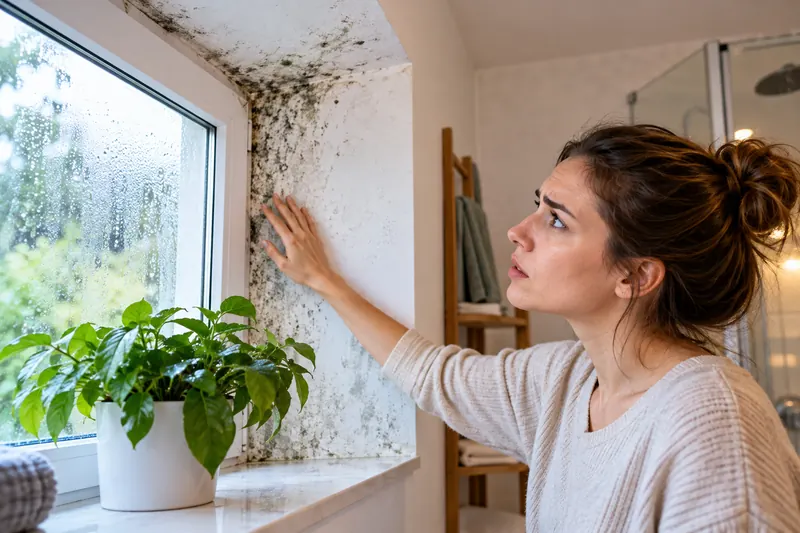
Indoor humidity changes with the season, climate, ventilation, and everyday activities such as cooking, showering, and drying clothes. A short period of high humidity is not necessarily a problem, but persistent excess moisture can contribute to condensation, odors, material damage, and mold growth.
A small hygrometer can help you measure relative humidity instead of guessing. The U.S. EPA commonly recommends keeping indoor humidity below 60 percent and, when practical, around 30 to 50 percent. These visible signs can tell you when it is worth checking.
1. Condensation repeatedly forms on windows
A little condensation during very cold weather can happen, but frequent droplets or wet window frames indicate that moist indoor air is contacting a cold surface.
Wipe the moisture, improve ventilation, and check whether activities such as showers, cooking, or indoor clothes drying are raising humidity.
2. A persistent musty smell
Musty odors often develop where moisture remains trapped in carpet, drywall, closets, basements, or behind furniture. The smell may appear before you can see a visible patch of mold.
Do not mask the odor with fragrance. Look for leaks, damp materials, and areas with poor airflow, then correct the moisture source.
3. Dark spotting or visible mold
Mold needs moisture to grow. Small areas around bathroom grout or windows may indicate repeated condensation, while broader growth can point to a leak or chronic humidity problem.
Address the water source first. Cleaning without correcting moisture usually allows the problem to return.
4. Paint bubbles, peels, or feels soft
Moisture behind paint can reduce adhesion and cause bubbling, peeling, or staining. Bathrooms, exterior walls, and areas near plumbing are common places to notice it.
Investigate for leaks and condensation rather than simply repainting the damaged area.
5. Wood swells or doors begin sticking
Wood absorbs and releases moisture as humidity changes. Persistent high humidity can make doors, trim, cabinets, and some flooring expand.
Seasonal movement can be normal, but sudden or severe swelling deserves a moisture check.
6. Rooms feel clammy even when the temperature is comfortable
High relative humidity can make indoor air feel heavy or sticky because perspiration evaporates less efficiently. You may notice this first in basements, bathrooms, or rooms with little air movement.
Measure humidity in the room and improve ventilation or dehumidification if levels stay high.
7. Laundry and towels take unusually long to dry
When the surrounding air already contains a lot of moisture, wet fabric dries more slowly. Towels that remain damp for hours can also develop odors.
Use bathroom exhaust fans, improve airflow, and avoid drying large amounts of laundry indoors unless the space is adequately ventilated.
8. Rust or corrosion appears in damp areas
Persistent moisture can encourage corrosion on metal fixtures, tools, fasteners, and appliance components.
Look beyond the rust itself. Condensation, a plumbing leak, or insufficient ventilation may be creating the conditions.
How to Reduce Indoor Humidity
Use kitchen and bathroom exhaust fans that vent outdoors, repair leaks promptly, ensure clothes dryers vent correctly, and use air conditioning or a dehumidifier when needed. Keep furniture slightly away from cold exterior walls if trapped air is causing condensation.
When to Call a Professional
If water damage is extensive, a leak is hidden, mold covers a large area, or moisture returns despite basic fixes, a qualified building, plumbing, HVAC, or remediation professional can help identify the source.
Frequently Asked Questions
What indoor humidity level is best?
There is no single perfect number for every climate, but the EPA recommends keeping indoor humidity below 60 percent and ideally around 30 to 50 percent when practical.
Does opening a window always lower humidity?
No. Opening windows helps only when the outdoor air is drier than the indoor air and conditions are appropriate. In hot, humid weather it can make indoor humidity worse.
Can a dehumidifier solve a leak?
No. A dehumidifier can remove moisture from the air, but a plumbing, roof, foundation, or drainage leak still needs to be repaired.
How to Investigate a Damp Room
A musty smell or recurring condensation is a clue, not a diagnosis. Before buying equipment, look for where moisture might be entering or accumulating. Check for plumbing leaks, blocked ventilation, drying laundry indoors or a bathroom fan that does not exhaust effectively.
- Measure, don’t guess: Use a basic hygrometer to observe humidity at different times of day; a single reading is not the full picture.
- Compare locations: A damp corner near a window may have a different cause from moisture throughout the home.
- Address the source: Ventilation and dehumidification can help manage moisture, but they do not repair an ongoing leak.
If you see significant mold growth, water damage or repeated wetness despite routine measures, consider a qualified building or moisture specialist rather than repeatedly cleaning the visible stain.