Household items rarely fail on a convenient schedule. Many deteriorate gradually, so the change is easy to miss until performance drops, a leak appears, or a safety device stops working.
Replacement intervals vary by manufacturer and usage. Rather than following a universal calendar, inspect condition and follow the product instructions. These twelve items deserve regular attention.
1. Smoke and carbon monoxide alarms
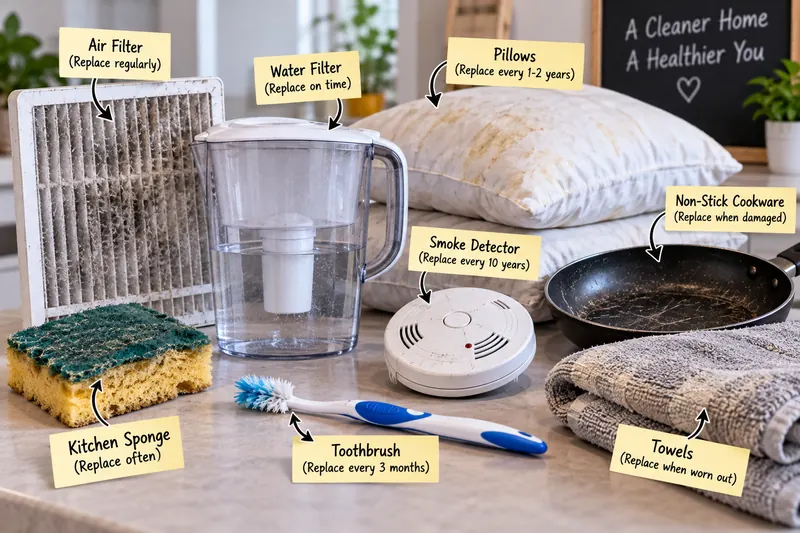
Alarms have limited service lives and batteries that require replacement or charging depending on the model. Test devices according to the manufacturer’s instructions and replace units when they reach their end-of-life date.
Do not disable nuisance alarms without correcting the underlying issue.
2. HVAC filters
A loaded filter can restrict airflow and collect dust. Replacement frequency depends on filter design, system use, pets, construction dust, and indoor conditions.
Check the filter regularly and use the type recommended for your system.
3. Washing machine supply hoses
Rubber or braided hoses can age, crack, bulge, or develop leaks at fittings. A failed hose can release a large amount of water.
Inspect hoses for corrosion, swelling, abrasion, or seepage and replace them according to the appliance or hose manufacturer’s guidance.
4. Refrigerator water filters
A filter used beyond its rated capacity may reduce flow and filtration performance.
Use the refrigerator’s indicator or the filter manufacturer’s time and capacity guidance rather than guessing.
5. Toilet flappers and fill-valve seals
A worn flapper can leak silently from the tank into the bowl, wasting water and causing frequent refilling.
If the toilet runs intermittently, inspect the seal and internal components rather than ignoring the sound.
6. Door and window weatherstripping
Foam and rubber seals compress, crack, or pull away over time. Drafts can reduce comfort and make heating or cooling work harder.
Replace damaged sections and correct door or window alignment if a new seal does not close evenly.
7. Pillows
Pillows lose support and accumulate body oils and moisture with use. There is no single replacement date for every material, but persistent flattening, lumps, odor, or lack of support are signs to evaluate them.
Wash only according to the care label and replace when cleaning no longer restores comfort.
8. Nonstick cookware with damaged coatings
Deep scratches, peeling, warping, or a coating that no longer performs as intended can be a reason to retire a pan.
Follow the manufacturer’s care instructions and avoid metal tools if the cookware does not permit them.
9. Cutting boards with deep grooves
Deeply scored cutting boards can become difficult to clean effectively. Wood can also split, while plastic boards can develop rough channels.
Replace boards that are cracked, badly warped, or deeply damaged, and keep separate boards if your food-safety routine calls for it.
10. Cleaning sponges and brushes
A sponge or brush that smells, stays dirty, or is physically breaking down is no longer a good cleaning tool.
Rinse and dry reusable tools between uses and replace them when they cannot be kept clean.
11. Power strips and extension cords
Cords with cracked insulation, loose plugs, scorch marks, or damaged outlets should be removed from service.
Never use a damaged electrical product as a temporary solution. Choose equipment rated for the load and environment.
12. Caulk around wet areas
Bathroom and kitchen caulk can separate, crack, or grow persistent discoloration. Failed seals allow water into joints where it can damage surrounding materials.
Remove and replace failed caulk using a product appropriate for the surface and wet area.
Make Inspection Part of Seasonal Cleaning
Twice a year, walk through the home and check safety devices, hoses, seals, filters, and electrical cords. A written list prevents gradual wear from becoming invisible.
Frequently Asked Questions
Should I replace items strictly by age?
Age can be useful for products with a defined service life, but condition, use, and manufacturer guidance matter too. Safety devices should follow their stated replacement dates.
What should I replace first?
Prioritize items that affect fire, carbon monoxide, water leaks, electricity, braking, or other safety risks before comfort or cosmetic items.
Can maintenance extend replacement time?
Often, yes. Cleaning, correct storage, and routine maintenance can extend useful life, but they do not override a manufacturer’s safety-related end-of-life guidance.